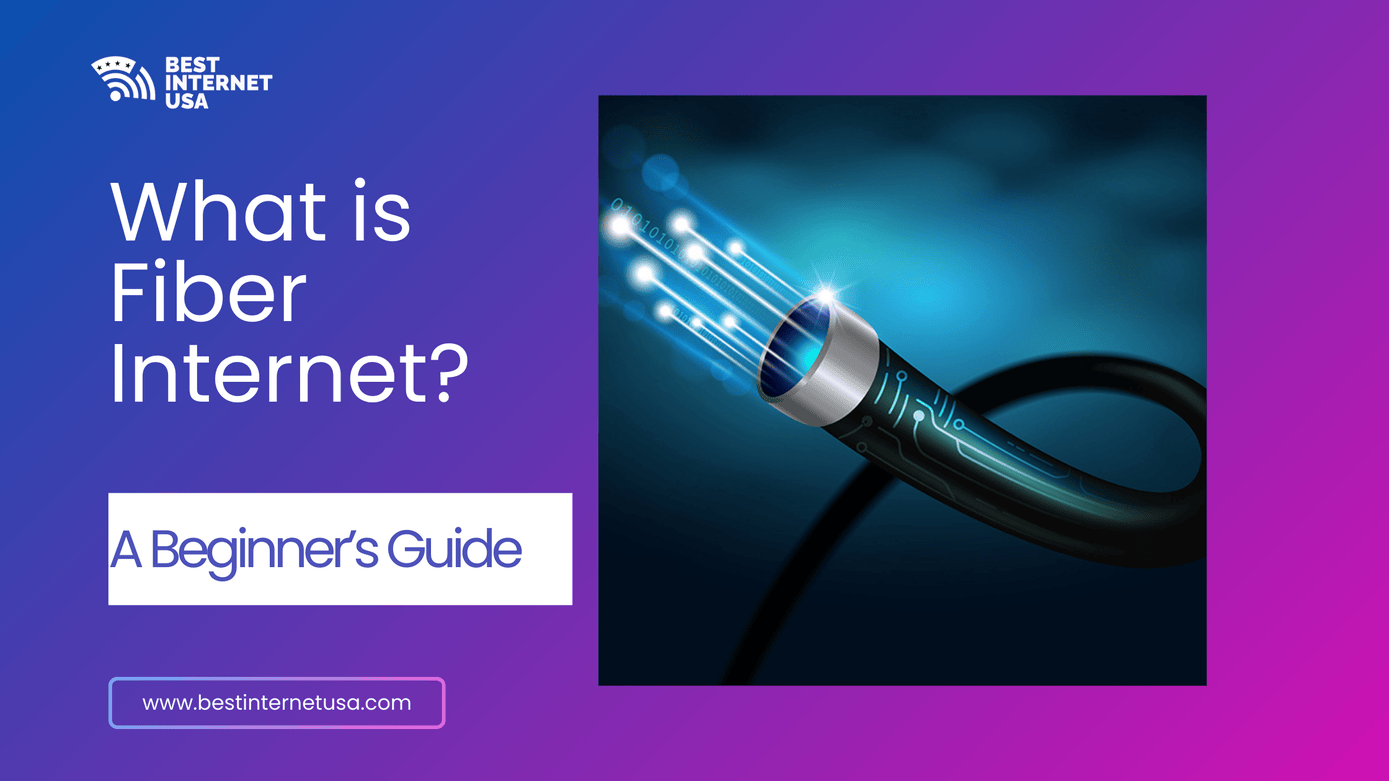
The demand for faster, more reliable internet has never been higher. From streaming ultra-HD videos to working remotely and gaming online, users expect seamless connectivity. That’s where “What is Fiber Internet” becomes an important question. Fiber technology is transforming how we connect to the digital world—but many people still don’t fully understand what makes it different. In this beginner’s guide, you’ll learn how fiber works, what makes it faster, how it compares with cable, WiFi, and 5G, and what you need to get started. By the end, you’ll know whether fiber is the right choice for your needs.
To understand fiber internet, it is important to understand its core technology. Fiber internet, also called fiber optic internet, uses strands of glass or plastic to transmit data as light signals. This allows information to travel much faster than traditional copper-based connections. Unlike older systems, fiber internet service focuses on speed, stability, and future scalability. This is why it’s becoming the preferred choice for modern households and businesses. When exploring fiber internet connection, think of it as a high-speed pipeline made of light. Data is sent through fiber optic cables using laser or LED signals, which travel at near-light speed.
This usually refers to hybrid systems where fiber is used for most of the network, but not necessarily all the way to your home. While not pure fiber, it still offers better speeds than traditional DSL or cable in many cases.
A common question is what is fiber internet cable made of. These cables include:
This design ensures minimal signal loss and maximum efficiency over long distances.
One of the biggest advantages people look for is fiber internet speed. Fiber connections can deliver speeds up to 1 Gbps or even higher, making them ideal for data-heavy activities.
Another benefit is symmetrical speed, meaning uploads are just as fast as downloads. This is especially useful for:
Compared to traditional options, fiber offers a smoother and more consistent experience.
Many users confuse fiber internet and wifi, but they serve different purposes. Fiber is the actual internet connection delivered to your home, while WiFi is the wireless method used to access that connection.
In simple terms:
You can use WiFi with any type of internet, including fiber, cable, or DSL.
Understanding fiber internet vs cable helps you make a better decision. Cable internet uses coaxial cables and electrical signals, which are slower and more prone to congestion.
If you’re wondering what is the difference between fiber and cable internet, here’s the key:
Another comparison is often made between fiber internet and 5g. While 5G offers impressive wireless speeds, it still has limitations.
Fiber provides:
5G, on the other hand, is more flexible but can be affected by distance and obstacles.
If you’re looking for equipment needed for fiber optic internet, here’s what you typically need:
These components convert light signals into usable internet for your devices.
Learn how to set up fast internet at home.
Availability of fiber internet depends largely on location, as the infrastructure is still expanding in many regions. Services vary by provider and coverage, so access may differ even within the same city or neighborhood.
For instance, AT&T Fiber is one of the most widely recognized services, offering high-speed connectivity in selected areas. Many users also compare AT&T Internet Air with fiber, where Internet Air operates on wireless technology, while fiber delivers a wired and more stable connection.
To determine what options are accessible, users typically need to visit an internet service provider’s website and enter their address to check coverage and available plans. For more detailed technical insights, you can explore this guide.
By now, you should clearly understand What is Fiber Internet and why it’s gaining popularity. It offers unmatched speed, reliability, and performance compared to older technologies. As more devices connect to the internet and data demands increase, fiber is well-positioned to meet future needs. Whether you’re working, streaming, or gaming, fiber provides a smooth and efficient experience.
Fiber internet uses light signals through cables to deliver ultra-fast speeds, making it ideal for streaming, gaming, and remote work.
No, fiber is the internet connection itself, while WiFi is the wireless method used to access that connection on devices.
You’ll need an ONT device, a modem or gateway, and a router to distribute the connection within your home.Discover what fiber internet is, how it works, and why it’s faster than cable and 5G in this beginner-friendly guide.
You can check availability by entering your address on an internet service provider’s website.
Fiber offers faster and more stable speeds, while Internet Air is wireless and may vary depending on signal strength.
We help you compare internet companies in USA and find best internet plans near you.
Best Internet USA
Copyright © 2026 All rights reserved.