In today’s connected homes, nothing is more frustrating than slow internet, buffering videos, or laggy video calls. Modern households rely on fast, reliable connections not just for browsing, streaming and gaming, but also for smart home devices, security systems with multiple users online at once. Understanding download vs upload speeds—or better yet, symmetrical speeds—is key to avoiding sluggish performance and choosing the right type of internet.
Symmetrical speeds refer to equal download and upload rates.
When either is slow, it causes lag, buffering, or poor responsiveness, especially in households with multiple users.
Most cable and older internet technologies are asymmetrical: fast downloads but limited uploads. This design is fine for casual browsing but struggles with modern workloads.
Fiber internet service providers deliver high, symmetrical speeds, ensuring smooth performance whether you’re streaming 4K content, gaming, or uploading large files.
Use free online tools like Ookla Speedtest to measure:
Regular testing helps identify poor bandwidth issues, equipment problems, or whether your type of internet or internet plan is insufficient.
Modern homes aren’t just connected—they’re smart homes. From security cameras and smart locks to voice assistants and smart appliances, reliable internet is essential. Symmetrical speeds are critical for:
USA Today suggests that while 100+ Mbps download speed was usually adequate its been observed that the various connectivity needs of today’s home internet users may infact, require 500 Mbps to over 1 Gbps for uninterrupted internet accessibility. Likewise, while 10+ Mbps upload speed is good for typical households; with multiple users and devices, actual speed requirements can be more than 100 Mbps . All in all. fiber internet with symmetrical speeds unlike cable or dsl is most capable of effortlessly meeting the modern day household’s internet requirements.
Asymmetrical speeds are simply not adequate for today’s user who literally needs to stay connected 24/7 and requires responses in real time. Gone are the days of tolerating frozen screens, choppy game play, inaccessible cloud files,dropped video calls, slow updates and incomplete backups. Fiber internet is a one stop solution to all these issues and more so stop struggling with slow speeds and uneven connectivity. Check fiber internet plans near you with Best Internet USA and enjoy fast, symmetrical speeds that keep your home streaming, gaming, working, and smart devices running smoothly.
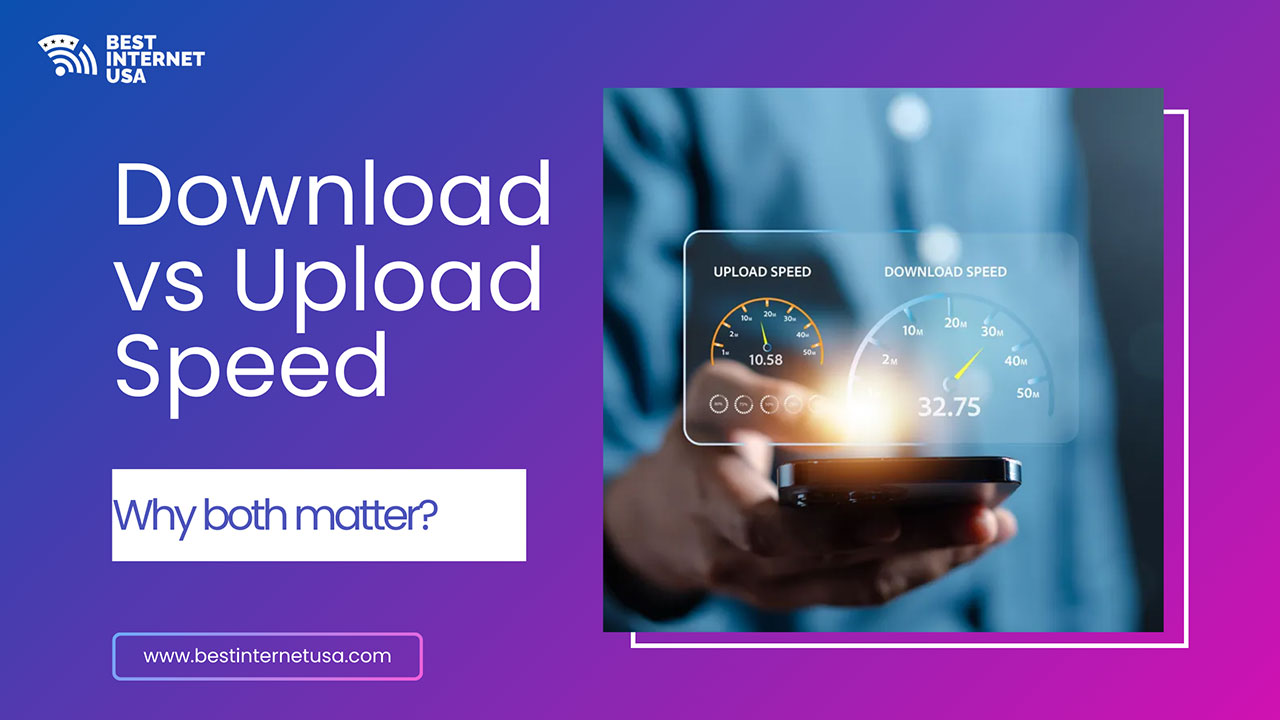
Download speed determines how fast content comes to your device, while upload speed controls how quickly you send data. Large gaps between the two can cause lag, buffering, and poor video call quality.
Slow upload speeds limit real-time data sharing, leading to frozen video calls, delayed gaming reactions, and slow cloud uploads—especially in homes with multiple users and devices.
Symmetrical speeds provide equal download and upload performance. This balance ensures smooth streaming, stable video conferencing, fast uploads, and consistent performance across smart home devices.
Run a speed test to measure download speed, upload speed, and latency. If uploads are significantly lower than downloads or performance drops with multiple users, your connection may be limiting your experience.
Fiber internet offers high, upload and download speeds with low latency, making it ideal for smart homes, remote work, gaming, streaming, and families using multiple connected devices at the same time.
We help you compare internet companies in USA and find best internet plans near you.
Best Internet USA
Copyright © 2026 All rights reserved.